B2C Ecommerce Website Development: The Complete Guide for 2026
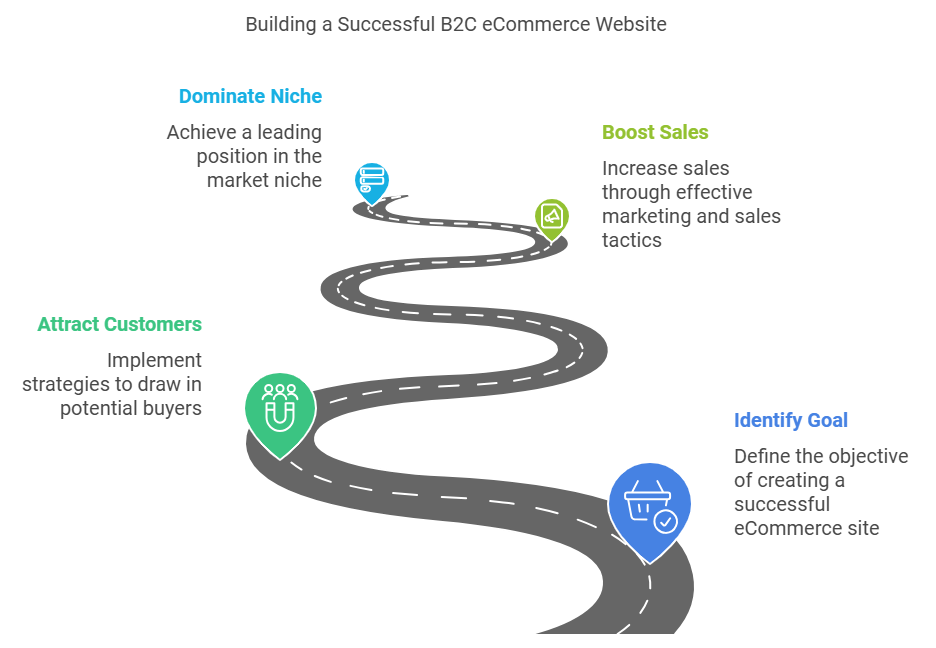
Want to build a B2C eCommerce website that doesn’t just work, but works wonders?
You’re in the right place.
This guide will take you, step-by-step, through building a killer B2C eCommerce site. These strategies can help, whether you're a startup or an established business. They will attract more customers, boost sales, and help you dominate your niche.
Let’s dive in.
What is B2C eCommerce Website Development (and Why It's a Game-Changer)?
B2C eCommerce, or Business-to-Consumer eCommerce, is selling online to consumers. Think of Amazon, Zappos, and Nike's D2C site.
Here’s why it’s powerful:
-
Convenience: Customers can shop 24/7 from anywhere.
-
Global Reach: You are no longer limited to a local audience.
-
Cost-Effective: Say goodbye to high rent and costs.
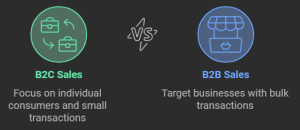
B2C vs. B2B eCommerce Development: The Key Difference
B2C sells small amounts to individual consumers. B2B sells in bulk to other businesses.
Quick Fact: By 2023, global B2C eCommerce sales hit $6.3 trillion. And, it's still climbing! (eCommerce Case Study)
Think of B2C as running a neighborhood bakery, where you sell cookies one by one to individual customers. B2B, on the other hand, is like selling your cookies in bulk to a grocery store chain. Both are profitable, but the approach and audience are completely different.
Webaholics Tip: With tools like OneApp, you can streamline your B2C operations, from inventory management to product optimization, and save time while maximizing profits.
Types of B2C eCommerce Website Models (and How to Pick the Right One)
1. Direct Sellers
This is the classic model. You sell your products directly to your customers via your website.
Example: Nike’s D2C strategy helped them boost revenue by 30% (Nike's D2C Shift Case Study).
-
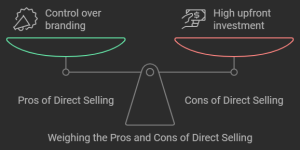
Pro: Full control over branding and customer experience.
-
Con: You will need to invest in marketing and logistics upfront.
Webaholics Insight: Did you know we specialize in eCommerce website development? Our team has helped businesses like yours create high-performing direct sales platforms.
2. Dropshipping
In this model, you sell products without holding inventory. Instead, a third-party supplier ships products directly to your customers.
Imagine running a lemonade stand without squeezing the lemons. Instead, you hire someone to make and deliver the lemonade while you focus on marketing.
-
Pro: Low startup costs and minimal inventory risk.
-
Con: You rely heavily on suppliers, which can lead to issues with product quality or delayed shipping. Margins are also thinner due to having a middleman.
3. Marketplaces
Selling on platforms like Amazon, Etsy, or eBay falls under this model. You leverage the built-in traffic of these platforms to reach customers.
Think of a marketplace as a bustling mall. You’re one store among many, competing for attention. Customers are already there, but it’s up to you to stand out.
-
Pro: Ready-made infrastructure and access to a large audience.
-
Con: High fees and intense competition. Differentiating yourself is crucial.
Benefits of Building a B2C eCommerce Website for Your Business
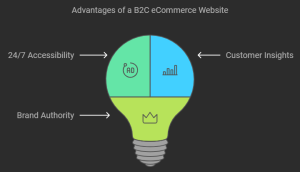
A B2C eCommerce website is not just for selling. It's for scaling. Here’s what you stand to gain:
-
24/7 Accessibility: Make sales while you sleep.
-
Customer Insights: Track customer behavior. Use it to improve your offerings.
-
Brand Authority: A custom site gives you more control over your brand’s narrative.
How Personalization Enhances Your eCommerce Website
Personalized product recommendations drive 26% of total sales.
For example, if you suggest another product based on one your customer already bought, that's personalization. And it works!
But, this is much more possible with a website. A website lets you create an email list and have built-in upsell functions. OneApp’s AI-driven tools can automate these upselling opportunities and help grow customer loyalty with ease.
Challenges in B2C eCommerce Website Development (and How to Overcome Them)
Challenge #1: Rising Competition
Solution: Find your niche. A smaller, targeted audience is often more profitable than a broad one.
It’s like fishing with a net in the open ocean versus using a fishing rod in a stocked pond. Your niche, the pond, has fewer fish. But, your bait is perfect for them.
Key Features of a Winning B2C eCommerce Website
1. Mobile-First Design
Why? Over 60% of online shoppers use their phones.
Imagine visiting a website on your phone that requires you to zoom in and out to click a button. Frustrating, right? A mobile-first design keeps your customers from feeling that way.
2. Speed and Security
Nobody likes a clunky site and checkout process. Use secure payment gateways. And keep the process simple.
Pro Tip: Webaholics offers one-day Shopify setups to get your business live fast. This includes integrating OneApp for seamless inventory syncing. Learn more about our Shopify setups.
3. SEO Optimization for eCommerce Websites
Organic revenue is a great way to grow your business and cut customer acquisition costs. But, it requires SEO expertise. You'll likely need to hire someone with the skills and time, or learn them yourself.
AI-Powered B2C Ecommerce: What's Changing in 2026
Artificial intelligence is no longer a nice-to-have for B2C ecommerce — it's becoming the dividing line between stores that grow and stores that stagnate. Here's how AI is reshaping every layer of the B2C ecommerce stack in 2026.
AI Product Recommendations That Actually Convert
Generic "customers also bought" widgets are being replaced by real-time AI recommendation engines that analyze browsing behavior, purchase history, seasonal trends, and even weather data to surface exactly the right product at the right moment. Stores using AI-driven recommendations see an average 35% increase in average order value compared to rule-based systems.
The key difference: AI recommendation engines learn continuously. They don't just follow static rules like "show matching accessories." They identify patterns across your entire customer base and adapt in real time — something no manual merchandising team can replicate at scale.
AI-Powered Search and Discovery
Traditional site search relies on exact keyword matching. A customer who types "red running shoes for wide feet" gets nothing if your product titles don't contain those exact words. AI-powered search understands intent. It interprets natural language queries, handles misspellings, and surfaces relevant results even when the wording doesn't match your catalog data.
Companies like Algolia and Bloomreach have made AI search accessible to mid-market stores, but the real competitive advantage comes from pairing AI search with your own first-party data — purchase patterns, return rates, and margin data — so your search results optimize for profitability, not just relevance.
Dynamic Pricing and Inventory Intelligence
AI pricing tools now monitor competitor pricing, demand signals, inventory levels, and even social media sentiment to adjust prices dynamically. This isn't the crude "surge pricing" consumers hate — it's intelligent optimization that keeps you competitive while protecting margins.
On the inventory side, AI demand forecasting reduces overstock and stockouts simultaneously. For B2C brands managing hundreds or thousands of SKUs, this alone can improve cash flow by 15-20% by reducing dead inventory.
Conversational Commerce and AI Chat
AI chatbots have evolved far beyond scripted FAQ bots. Modern conversational AI can handle product questions, process returns, upsell complementary items, and even complete purchases entirely within a chat interface. For B2C stores, this means 24/7 sales support without the overhead of a full customer service team.
The businesses seeing the best results combine AI chat with human handoff — the AI handles routine inquiries (70-80% of volume) and escalates complex issues to real people. This hybrid approach keeps customer satisfaction high while dramatically reducing support costs.
Generative AI for Product Content
Writing product descriptions, generating SEO-optimized category page content, and creating email marketing campaigns at scale — these are tasks that used to require teams of copywriters. Generative AI tools can now produce first drafts in seconds, which your team reviews and refines. Stores with large catalogs (500+ SKUs) are saving 40-60 hours per month on content production alone.
What This Means for Your B2C Store
The stores that will win in 2026 are the ones that treat AI as infrastructure, not a feature. That means building your ecommerce platform on a foundation that can integrate AI tools natively — custom headless builds with Next.js or similar frameworks, not locked-down SaaS templates that limit what you can connect.
At Webaholics, we build AI-native ecommerce stores from the ground up. Our ecommerce development team integrates AI recommendations, intelligent search, and automation directly into the platform architecture so you're not bolting on third-party widgets after the fact.
Ready to Build Your B2C eCommerce Website in 2026?
Building a B2C eCommerce site may seem tough. But, with the right plan, it’s doable.
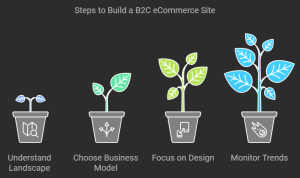
Recap:
-
Understand the B2C landscape.
-
Choose the right model for your business.
-
Focus on mobile-first design, SEO, and user experience.
-
Keep an eye on future trends to stay ahead.
Webaholics Advantage: With over 8 years of experience building 8-figure eCommerce stores, our team is here to help scale your business. From Shopify setups to custom design and optimization, we can guide you every step of the way.
Frequently Asked Questions About B2C eCommerce Website Development
What is the cost of B2C eCommerce website development?
The cost varies depending on complexity and platform, but it can enhance sales significantly.
Can you provide examples of successful B2C websites?
Yes! Sites like Amazon, Zappos, and Nike D2C are great examples.
What are some disadvantages of B2C eCommerce?
Challenges include competition and marketing costs, but tools like OneApp can help streamline operations.
Related Resources
- B2C Ecommerce Development Services — Custom DTC storefronts with AI-powered personalization and sub-300ms load times.
- Our Ecommerce Services — Full-service ecommerce development, from Shopify to custom headless builds.
- Shopify Speed Optimization: 12 Proven Fixes for a 90+ PageSpeed Score — Make your store faster and convert more visitors.
- Ecommerce Catalog Management: 8 Best Practices + Top Tools — Organize product data for better SEO and customer experience.